Jon's Health Tips - Sports Drinks

I drink a lots of sports drink while playing soccer – and it really seems to help more than water – I recently switched to a zero calorie drink – with no apparent loss of efficacy. But I had no idea that the question of how sports drinks help was such a mystery – until I read about the research described here:

It has long been known that sugary drinks and sweets can significantly improve athletes' performance in endurance events. The question is how?

Clearly, 'sports' drinks and tablets contain calories. But this alone is not enough to explain the boost, and the benefits are felt even if the drink is spat out rather than swallowed. Nor does the sugary taste solve the riddle, as artificial sweeteners do not boost performance even when they are indistinguishable from real sugars.

Writing in the latest issue of The Journal of Physiology, Ed Chambers and colleagues not only show that sugary drinks can significantly boost performance in an endurance event without being ingested, but so can a tasteless carbohydrate – and they do so in unexpected ways.

The researchers prepared drinks that contained either glucose (a sugar), maltodextrin (a tasteless carbohydrate) or neither, then carefully laced them with artificial sweeteners until they tasted identical. They asked endurance-trained athletes to complete a challenging time-trial, during which they rinsed their mouths with one of the three concoctions.

The results were striking. Athletes given the glucose or maltodextrin drinks outperformed those on 'disguised' water by 2 - 3% and sustained a higher average power output and pulse rate, even though didn't feel they were working any harder. The authors conclude that as-yet unidentified receptors in the mouth independent from the usual 'sweet' taste buds must be responsible. "Much of the benefit from carbohydrate in sports drinks is provided by signalling directly from mouth to brain rather than providing energy for the working muscles," explained Dr Chambers.

The team then used a neuro-imaging technique known as fMRI to monitor the athletes' brain activity shortly after giving them one of the three compounds. They found that both glucose and maltodextrin triggered specific areas of the brain associated with reward or pleasure, while the artificial sweetener did not. This acts to reduce the athletes' perception of their workload, suggest the authors, and hence enables them to sustain a higher average output.

Their findings support the emerging 'central governor hypothesis' – the theory that it is not the muscles, heart or lungs that ultimately limit performance, but the brain itself, based on the information it receives from the body. Stimulating the brain in certain ways – such as swilling sugary drinks – can boost output, perhaps giving athletes that all-important edge over their rivals.

Palm Oil Not a Healthy Substitute for Trans Fats


Manufacturers are now required to state on food labels the amount of trans fatty acids, also called hydrogenated fats, in packaged foods. Both trans fatty acids and saturated fatty acids are associated with elevated heart disease risk factors.

Now, authors of an Agricultural Research Service (ARS)-supported study have addressed the question of whether palm oil, whose functional characteristics are similar to trans fats, would be a good substitute for partially hydrogenated fat.

Trans fatty acids (trans fats) are created during a hardening process called hydrogenation, which serves to make oils suitable for use in products that require solid fats, such as baked goods and breakfast bars. The clinical trial was designed to compare--on heart disease risk--the effect of four different oils as they are commonly consumed.

Lead scientist Alice H. Lichtenstein and colleagues conducted the study. She is with the Jean Mayer USDA Human Nutrition Research Center on Aging at Tufts University in Boston, Mass.

Fifteen adults, both male and female, volunteered for the study. Their levels of LDL "bad" cholesterol were moderately high at 130 milligrams per deciliter of blood or above, and all were aged 50 or older. They each consumed each of four 35-day experimental diets. The fats tested were partially hydrogenated soybean oil (moderately high in trans fat), palm oil (high in saturated fat), canola oil (high in monounsaturated fat), and soybean oil (high in polyunsaturated fat).

The findings suggest that consuming either of the diets enriched with equivalent high amounts of palm oil or partially hydrogenated soybean oil would result in similar unfavorable levels of LDL cholesterol and apolipoprotein B (a protein, attached to fat particles, that carries bad cholesterol throughout the bloodstream). That's when compared to consuming either of the diets enriched with canola and soybean oils high in monounsaturated and polyunsaturated fats, respectively.

The results suggest that palm oil would not be a good substitute for trans fats by the food industry, the authors wrote.

Read more about this research in the April 2009 issue of Agricultural Research magazine, available online at: http://www.ars.usda.gov/is/AR/archive/apr09/fats0409.htm

Honey Beats Sinusitis


Honey effective in killing bacteria that cause chronic sinusitis

Honey is very effective in killing bacteria in all its forms, especially the drug-resistant biofilms that make treating chronic rhinosinusitis difficult, according to research presented during the 2008 American Academy of Otolaryngology-Head and Neck Surgery Foundation (AAO-HNSF) Annual Meeting & OTO EXPO, in Chicago, IL.

The study, authored by Canadian researchers at the University of Ottawa, found that in eleven isolates of three separate biofilms (Pseudomonas aeruginosa, and methicicillin-resistant and -suseptible Staphylococcus aureus), honey was significantly more effective in killing both planktonic and biofilm-grown forms of the bacteria, compared with the rate of bactericide by antibiotics commonly used against the bacteria.
Given the historical uses of honey in some cultures as a homeopathic treatment for bad wound infections, the authors conclude that their findings may hold important clinical implications in the treatment of refractory chronic rhinosinusitis, with topical treatment a possibility.

Chronic rhinosinusitis affects approximately 31 million people each year in the United States alone, costing over $4 billion in direct health expenditures and lost workplace productivity. It is among the three most common chronic diseases in all of North America.


Broccoli Sprouts


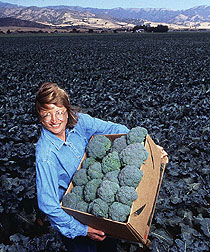
A small, pilot study in 50 people in Japan suggests that eating two and a half ounces of broccoli sprouts daily for two months may confer some protection against a rampant stomach bug that causes gastritis, ulcers and even stomach cancer.

Citing their new "demonstration of principle" study, a Johns Hopkins researcher and an international team of scientists caution that eating sprouts containing sulforaphane did not cure infection by the bacterium Helicobacter pylori (H. pylori). They do not suggest that eating this or any amount of broccoli sprouts will protect anyone from stomach cancer or cure GI diseases.

However, the study does show that eating a daily dose of broccoli sprouts reduced by more than 40 percent the level of HpSA, a highly specific measure of the presence of components of H. pylori shed into the stool of infected people. There was no HpSA level change in control subjects who ate alfalfa sprouts. The HpSA levels returned to pretreatment levels eight weeks after people stopped eating the broccoli sprouts, suggesting that although they reduce H. pylori colonization, they do not eradicate it.

"The highlight of the study is that we identified a food that, if eaten regularly, might potentially have an effect on the cause of a lot of gastric problems and perhaps even ultimately help prevent stomach cancer," says Jed W. Fahey, M.S., Sc.D., an author of the paper who is a nutritional biochemist in the Lewis B. and Dorothy Cullman Cancer Chemoprotection Center at the Johns Hopkins University School of Medicine.

The discovery that sulforaphane is a potent antibiotic against H. pylori was reported in 2002 by Fahey and colleagues at Johns Hopkins. "Broccoli sprouts have a much higher concentration of sulforaphane than mature heads," Fahey explains, adding that further investigation is needed to affirm the results of this clinical trial and move the research forward. The study, published April 6 in Cancer Prevention Research, builds on earlier test-tube and mouse studies at Johns Hopkins and elsewhere about the potential value of sulforaphane, a naturally occurring biochemical found in relative abundance in fresh broccoli sprouts. (http://www.hopkinsmedicine.org/press/2002/may/020528.htm) Sulforaphane appears to trigger cells in the body, including in the gastrointestinal tract, to produce enzymes that protect against oxygen radicals, DNA-damaging chemicals, and inflammation.

In the new report, the team also shows that when H. pylori-infected mice sipped broccoli-sprout smoothies for eight weeks, there was up to a fourfold increase in the activity of two of these key enzymes that protect cells against oxidative damage. In addition, the number of Helicobacter bacteria in the mice's stomachs decreased by almost a hundredfold it did not change in infected control animals that drank plain water. The researchers also noted a greater than 50 percent reduction in inflammation of the primary target of this bacterium - the body of the stomach - in treated mice but not in controls.

In a related experiment, the team fed the same dose of broccoli sprouts for the same amount of time to H. pylori-infected mice that had been genetically engineered to lack the Nrf2 gene that activates protective enzymes. "These knock-out mice didn't respond," Fahey says, which confirms previous findings for a role of Nrf2 in protection against H. pylori-induced inflammation and gastritis.

Classified a carcinogen by the World Health Organization, H. pylori is a gastrointestinal tract germ that manages to thrive in the lining of the stomach despite the strength of natural acids there that rival that of car batteries. Afflicting several billion people - roughly half of the world's population - this corkscrew-shaped bacterium has long been associated with stomach ulcers, which now are frequently cured by antibiotics. Research strongly suggests that the bacteria also are linked to high rates of stomach cancer in some countries, that strains resistant to standard antibiotics are prevalent, and that multiple courses of standard antibiotics do not always eliminate the infection.

Working in Japan where there is high incidence of chronic H. pylori-infection, the research team gave 25 H. pylori-infected subjects two and a half ounces (70 grams) per day of broccoli sprouts for two months. Another 25 infected people consumed an equivalent amount of alfalfa sprouts which, although rich in phytochemicals, don't contain sulforaphane.

The researchers assessed the severity of Helicobacter infection at the start of the study, after four and eight weeks of treatment, and again eight weeks after intervention was stopped. They used breath tests to assess colonization by H. pylori bacteria and blood tests to judge the severity of inflammation in the stomach lining; in addition, they looked for antigens in stool samples to help determine the extent of the infections.

"We know that a dose of a couple ounces a day of broccoli sprouts is enough to elevate the body's protective enzymes," Fahey says. "That is the mechanism by which we think a lot of the chemoprotective effects are occurring."

"What we don't know is whether it's going to prevent people from getting stomach cancer. But the fact that the levels of infection and inflammation were reduced suggests the likelihood of getting gastritis and ulcers and cancer is probably reduced."

"It's exciting that a chronic bacterial infection that poses great hazards to hundreds of millions of people globally can be ameliorated by a specific dietary strategy," says Paul Talalay, M.D., John Jacob Abel Distinguished Service Professor of Pharmacology and Experimental Therapeutics and director of the Lewis B. and Dorothy Cullman Cancer Chemoprotection Center at Johns Hopkins' Institute for Basic Biomedical Sciences.

Talalay directs the lab where, in 1992, his team discovered the health-promoting properties of sulforaphane. A longtime proponent of cancer prevention and chemoprotection, Talalay eats fresh broccoli sprouts regularly, as does Fahey.
"I like them," Fahey says. "I eat them all the time, but not every day. Variety is the spice of life: I eat blueberries on the other days."


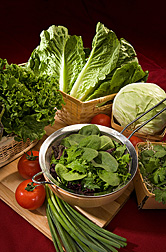
Produce and leafy greens in the photo are (clockwise from top): romaine lettuce, cabbage, cilantro in a bed of broccoli sprouts, spinach and other leafy greens, green onions, tomatoes, and green leaf lettuce.

Soy


Soy protein, isoflavones, and cardiovascular health: an American Heart Association Science Advisory for professionals from the Nutrition Committee.


Soy protein and isoflavones (phytoestrogens) have gained considerable attention for their potential role in improving risk factors for cardiovascular disease. This scientific advisory assesses the more recent work published on soy protein and its component isoflavones.

In the majority of 22 randomized trials, isolated soy protein with isoflavones, as compared with milk or other proteins, decreased LDL cholesterol concentrations; the average effect was approximately 3%. This reduction is very small relative to the large amount of soy protein tested in these studies, averaging 50 g, about half the usual total daily protein intake. No significant effects on HDL cholesterol, triglycerides, lipoprotein(a), or blood pressure were evident. Among 19 studies of soy isoflavones, the average effect on LDL cholesterol and other lipid risk factors was nil. Soy protein and isoflavones have not been shown to lessen vasomotor symptoms of menopause, and results are mixed with regard to soy's ability to slow postmenopausal bone loss. The efficacy and safety of soy isoflavones for preventing or treating cancer of the breast, endometrium, and prostate are not established; evidence from clinical trials is meager and cautionary with regard to a possible adverse effect. For this reason, use of isoflavone supplements in food or pills is not recommended. Thus, earlier research indicating that soy protein has clinically important favorable effects as compared with other proteins has not been confirmed.

In contrast, many soy products should be beneficial to cardiovascular and overall health because of their high content of polyunsaturated fats, fiber, vitamins, and minerals and low content of saturated fat.

Soy May Reduce the Risk of Colorectal Cancer

A new study published in the American Journal of Clinical Nutrition explores how soyfood consumption may lower the risk of colorectal cancer, or cancer of the colon or rectum, in postmenopausal women. According to the National Cancer Institute, an estimated 71,560 American women were diagnosed with the fourth most common cancer in 2008.

Vanderbilt University School of Medicine researchers found that women who consumed at least 10 grams of soy protein daily were one-third less likely to develop colorectal cancer in comparison to women who consumed little soy. This is the amount of soy protein available in approximately one serving of tofu (1/2 cup), roasted soy nuts (1/4 cup), edamame (1/2 cup) or soy breakfast patties (2 patties).

The study observed soy intake in 68,412 women between the ages of 40 and 70, all free of cancer and diabetes prior to the initial screening. Researchers identified 321 colorectal cancer cases after participants were monitored for an average of 6.4 years. After adjusting for confounding factors, total soyfood intake was inversely associated with colorectal cancer risk among postmenopausal women.

“Research this comprehensive demonstrates how important it is for baby boomer and older women to add soy into their daily diet,” said Lisa Kelly, RD, MPH, for the United Soybean Board. “Furthermore, the study’s recommended serving is a simple and affordable nutritional step towards everyday wellness.”
Evidence shows soy can play an important role in a healthy diet for a variety of reasons. It is a source of high-quality protein, and contains relatively little saturated fat as well as zero grams of trans fat. Soy protein also directly lowers blood cholesterol levels. And, for postmenopausal women in particular, the largest and longest trial published to date reported that the phytoestrogens in soy reduced hot flashes by 50 percent. A range of products – from soymilk to soy burgers to soy protein bars – can help deliver soy’s benefits with convenience.

Soy Nuts May Improve Blood Pressure

Substituting soy nuts for other protein sources in a healthy diet appears to lower blood pressure in postmenopausal women, and also may reduce cholesterol levels in women with high blood pressure, according to a report in the May 28 issue of Archives of Internal Medicine, one of the JAMA/Archives journals.

The American Heart Association estimates that high blood pressure (hypertension) affects approximately 50 million Americans and 1 billion individuals worldwide. The most common-and deadly-result is coronary heart disease, according to background information in the article. Women with high blood pressure have four times the risk of heart disease as women with normal blood pressure.

Francine K. Welty, M.D., Ph.D., and colleagues at Beth Israel Deaconess Medical Center, Boston, assigned 60 healthy post-menopausal women to eat two diets for eight weeks each in random order. The first diet, the Therapeutic Lifestyle Changes (TLC) diet, consisted of 30 percent of calories from fat (with 7 percent or less from saturated fat), 15 percent from protein and 55 percent from carbohydrates; 1,200 milligrams of calcium per day; two meals of fatty fish (such as salmon or tuna) per week; and less than 200 milligrams of cholesterol per day. The other diet had the same calorie, fat and protein content, but the women were instructed to replace 25 grams of protein with one-half cup of unsalted soy nuts. Blood pressure and blood samples for cholesterol testing were taken at the beginning and end of each eight-week period.

At the beginning of the study, 12 women had high blood pressure (140/90 milligrams of mercury or higher) and 48 had normal blood pressure. "Soy nut supplementation significantly reduced systolic [top number] and diastolic [bottom number] blood pressure in all 12 hypertensive women and in 40 of the 48 normotensive women," the authors write. "Compared with the TLC diet alone, the TLC diet plus soy nuts lowered systolic and diastolic blood pressure 9.9 percent and 6.8 percent, respectively, in hypertensive women and 5.2 percent and 2.9 percent, respectively, in normotensive women."

In women with high blood pressure, the soy diet also decreased levels of low-density lipoprotein ("bad") cholesterol by an average of 11 percent and levels of apoliprotein B (a particle that carries bad cholesterol) by an average of 8 percent. Cholesterol levels remained the same in women with normal blood pressure.

"A 12-millimeter of mercury decrease in systolic blood pressure for 10 years has been estimated to prevent one death for every 11 patients with stage one hypertension treated; therefore, the average reduction of 15 milligrams of mercury in systolic blood pressure in hypertensive women in the present study could have significant implications for reducing cardiovascular risk and death on a population basis," the authors write.__"This study was performed in the free-living state; therefore, dietary soy may be a practical, safe and inexpensive modality to reduce blood pressure. If the findings are repeated in a larger group they may have important implications for reducing cardiovascular risk in postmenopausal women on a population basis," they conclude.


Eating soy early in life may reduce breast cancer among Asian women

Asian-American women who ate higher amounts of soy during childhood had a 58 percent reduced risk of breast cancer, according to a study published in Cancer Epidemiology, Biomarkers and Prevention, a journal of the American Association for Cancer Research.
"Historically, breast cancer incidence rates have been four to seven times higher among white women in the U.S. than in women in China or Japan. However, when Asian women migrate to the U.S., their breast cancer risk rises over several generations and reaches that of U.S. white women, suggesting that modifiable factors, rather than genetics, are responsible for the international differences. These lifestyle or environmental factors remain elusive; our study was designed to identify them," said Regina Ziegler, Ph.D., M.P.H., a senior investigator in the NCI Division of Cancer Epidemiology and Genetics (DCEG).

The current study focused on women of Chinese, Japanese and Filipino descent who were living in San Francisco, Oakland, Los Angeles or Hawaii. Researchers interviewed 597 women with breast cancer and 966 healthy women. If the women had mothers living in the United States, researchers interviewed those mothers to determine the frequency of soy consumption in childhood.

Researchers divided soy intake into thirds and compared the highest and lowest groups. High intake of soy in childhood was associated with a 58 percent reduction in breast cancer. A high level of soy intake in the adolescent and adult years was associated with a 20 to 25 percent reduction. The childhood relationship held in all three races and all three study sites, and in women with and without a family history of breast cancer. "Since the effects of childhood soy intake could not be explained by measures other than Asian lifestyle during childhood or adult life, early soy intake might itself be protective," said the study's lead investigator, Larissa Korde, M.D., M.P.H., a staff clinician at the NCI's Clinical Genetics Branch.

"Childhood soy intake was significantly associated with reduced breast cancer risk in our study, suggesting that the timing of soy intake may be especially critical," said Korde. The underlying mechanism is not known. Korde said her study suggests that early soy intake may have a biological role in breast cancer prevention. "Soy isoflavones have estrogenic properties that may cause changes in breast tissue. Animal models suggest that ingestion of soy may result in earlier maturation of breast tissue and increased resistance to carcinogens."

As provocative as the findings are, Ziegler cautioned that it would be premature to recommend changes in childhood diet. "This is the first study to evaluate childhood soy intake and subsequent breast cancer risk, and this one result is not enough for a public health recommendation," she said. "The findings need to be replicated through additional research."

Soybean component reduces menopause effects

Soy aglycons of isoflavone (SAI), a group of soybean constituent chemicals, have been shown to promote health in a rat model of the menopause. The research, described in BioMed Central's open access journal Nutrition & Metabolism, shows how dietary supplementation with SAI lowers cholesterol, increases the anti-oxidative properties of the liver and prevents degeneration of the vaginal lining.

Robin Chiou led a team of researchers from National Chiayi University, Taiwan, who studied the effects of the dietary supplement on a group of female rats that had undergone ovary removal. He said, "These ovariectomized animals are a good model for study of the menopause as the loss of oestrogen from the ovaries mimics the natural reduction in oestrogen seen in menopausal women. SAI itself has weak oestrogenic properties and we've shown here that menopause-related syndromes can be prevented or improved by dietary supplementation with the compounds it contains".

In comparison to control animals, the authors found that the ovariectomized rats fed a diet enriched with SAI showed increased liver antioxidative activities and improved lipid profiles. Levels of harmful LDL cholesterol were reduced, while beneficial HDL cholesterol was increased. According to Chiou, "It is generally agreed that the higher HDL and the lower LDL concentrations are of benefit in chemoprevention of cardiovascular diseases. Our findings support the indication that soybean consumption may prevent coronary heart disease".

The authors hope that dietary soy supplementation may provide an alternative to hormone replacement therapy (HRT), which has been linked to the development of uterus and breast cancers.

Berry Compound Reduces Aging Effect


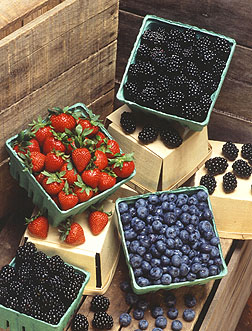
In a new study, aged laboratory animals that ate a diet rich in the berry and grape compound pterostilbene performed better than those in a group that did not eat the enriched diet, scientists with the Agricultural Research Service (ARS) have reported. Pterostilbene reversed measurable negative effects of aging on brain function and behavioral performance.

The study was published recently in the Journal of Agricultural and Food Chemistry.

For the two-part study, the researchers wanted to determine if pterostilbene would be effective in reversing the effects of aging on mature rats.

For the first part of the study, they tested seven stilbene compounds in cell cultures and found that pterostilbene was the most effective at preventing oxidative stress. For the second part of the study, they fed aged rats one of three diets: control, or control adjusted to include either low or high concentrations of pterostilbene.

The results indicated that in aging rats, pterostilbene was effective in reversing cognitive decline and that improved working memory was linked to pterostilbene levels in the hippocampus region of the brain.

How Plants Protect Us from Disease

Everyday foods, beverages, and spices contain healthful compounds that help us fight harmful inflammation. And, in doing that, these phytochemicals--the resveratrol in red wine or the catechins in green, white and black teas, for instance--may also reduce our risk of diseases associated with chronic inflammation, including cancer and diabetes.

At the Agricultural Research Service (ARS) Western Human Nutrition Research Center in Davis, Calif., research molecular biologist Daniel H. Hwang conducts studies to solve the complex puzzle of precisely how phytochemicals fight inflammation. His investigations with cells cultured in his laboratory have uncovered probable modes of action used by phytochemicals from red wine, green tea, garlic, curcumin and cinnamon.

Hwang's team has found, for example, that phytochemicals can interfere with the normal flow of certain chemical signals or messages sent to and from cells involved in chronic inflammation. The messages these cells send are in the form of proteins. In particular, his group is closely examining proteins known as TLRs (short for "Toll-Like Receptors") and NODs (an abbreviation for the tongue-twisting "nucleotide binding oligomerization domain containing proteins").

Their experiments show that certain phytochemicals can interfere with messages that, if unimpeded, could travel from TLRs and NODs, reaching and activating genes that can trigger an inflammatory response.

The studies suggest that different phytochemicals have different ways of interfering with these messages. For example, curcumin can undermine certain TLRs when a specific part of curcumin's chemical structure reacts with what are known as "sulfhydryl groups" in TLRs.

But resveratrol, found in red grapes, has a different set of targets. Hwang's experiments suggest that resveratrol interferes with molecules called "TBK1" and "RIP1." If unimpeded, these molecules would help convey signals to and from TLRs.

Read more about the research in the April 2009 issue of Agricultural Research magazine, available online at: http://www.ars.usda.gov/is/AR/archive/apr09/plants0409.htm.

 
Free Host | new york lasik surgery | cpa website design